PATS makes pest control smart, targeted and real-time
Know what is happening in the greenhouse before a pest develops into a serious problem. PATS helps greenhouse horticulture businesses around the world manage insect pests more effectively using smart camera systems and technology-based control solutions. This enables growers to detect crop pests at an early stage, deploy biological solutions more precisely and reduce the use of crop protection products.
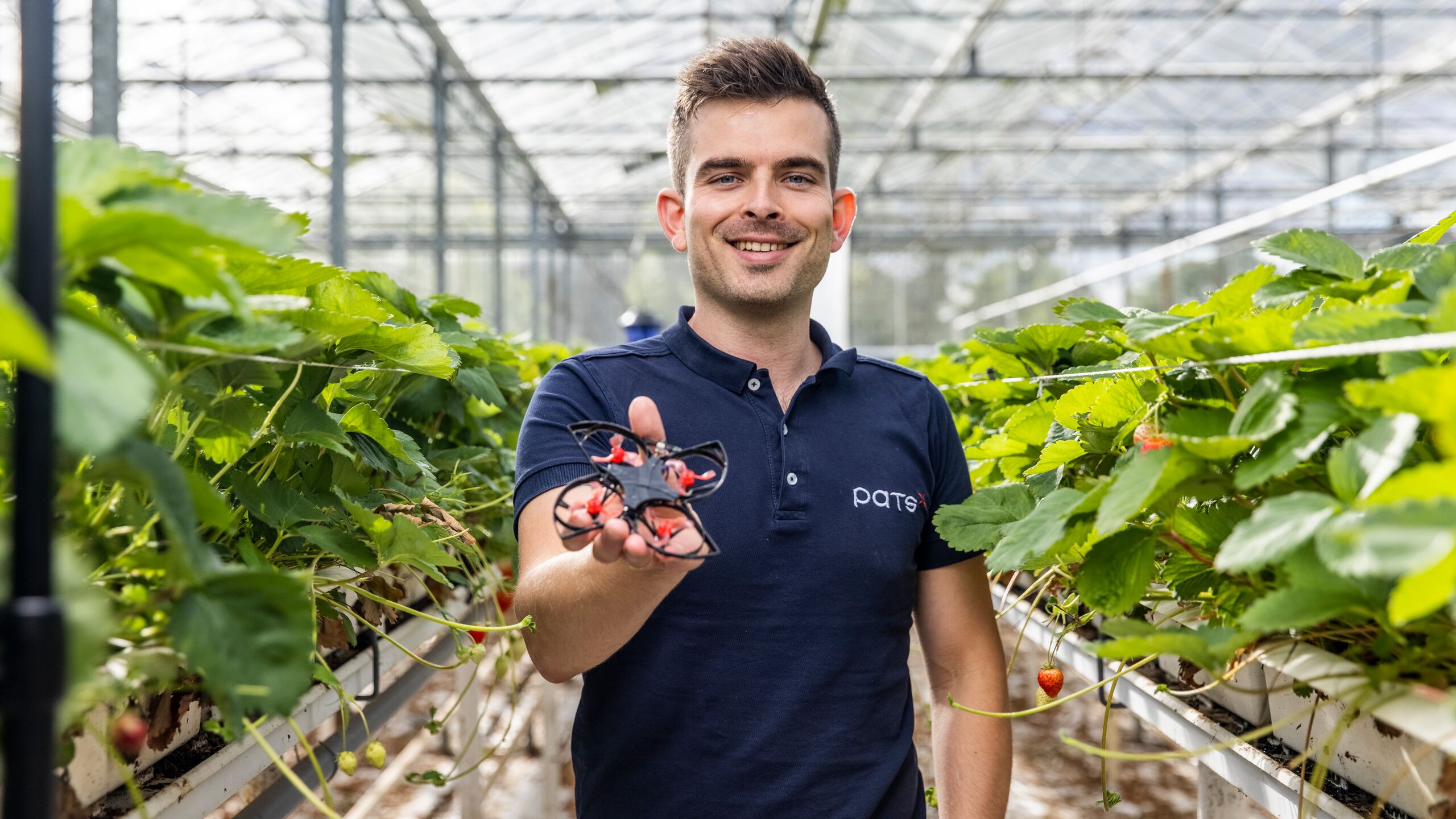
The ambition of this innovation leader from Delft is to build a complete system that enables growers to gain and maintain structural control over the biggest pest challenges in the greenhouse. By combining monitoring with targeted technological and mechanical interventions, such as bat-like drones, growers can intervene with great precision while preserving beneficial insects and reducing their reliance on broad-spectrum crop protection products. In this way, PATS can contribute to making the sector more sustainable. The scale-up now supports more than 250 customers in 25 countries and is working with Rabobank’s Startup & Scale-up Team on its next phase of international growth.
From manual counting to continuous insight
Crop protection in greenhouse horticulture still depends heavily on manual inspections. Employees walk through the greenhouse, inspect the crop and count insects on sticky traps. This is time-consuming and provides only a snapshot. As a result, a pest is sometimes not detected until it has already caused damage. This traditional approach is coming under increasing pressure. Growers must comply with stricter laws and regulations while also finding that retailers and other major buyers expect more sustainable cultivation methods. Those who want to maintain control while using fewer crop protection products therefore need more frequent and reliable insights than manual measurements can provide.
PATS digitises and automates this process. The company’s technology continuously detects which insects are present in a greenhouse and how their populations are developing. This gives growers real-time insight into pest pressure, allowing them to determine sooner whether intervention is needed.
— Bram Tijmons, CEO and co-founder of PATS
Technology as a third pillar
Traditionally, crop protection consists of a combination of biological control using natural enemies and the application of crop protection products. PATS adds technology as a third pillar. The company develops a range of solutions for monitoring, detection and control. Trap-Eye identifies small insects on sticky traps, PATS-C monitors flying insects and detects changes in pest pressure, while PATS-X autonomously controls specific pest moths using drones. The grower’s practical knowledge is an essential part of the system. PATS data is combined with the knowledge and experience of the grower and cultivation team, creating a cycle of monitoring, assessment, intervention and renewed measurement.
Pepper cultivation is one example. Moths can produce caterpillars that cause extensive damage in a short period of time. PATS technology enables growers to track moth activity and predict up to a week in advance when the risk of caterpillars will increase. This allows them to plan labour and interventions precisely. For several growers, this has helped them switch entirely to biological control for this pest and avoid broad-spectrum products.
Demand for technologies like those developed by PATS is growing. Greenhouse growers need to become more sustainable while the number of available crop protection products is declining and labour is scarce. At the same time, pest outbreaks can have major consequences for yield, quality and security of supply. For growers, the added value therefore extends beyond using fewer products. Earlier warning of an emerging pest also helps them plan labour more effectively, carry out biological interventions at the right time and limit risks to yield, quality and security of supply. Continuous monitoring thus provides an additional layer of assurance in day-to-day operations.

— Sander Peltenburg, Rabobank Startup & Scale-up Team
Internationally validated and ready to scale
The solution has now been validated internationally. PATS serves more than 250 customers in 25 countries, and its technology is used across more than 30 different crops. From tomatoes in the Netherlands and roses in East Africa to ornamental and house plants in North America. The systems can be used in different types of greenhouses and cultivation environments. This broad applicability is important for scaling. PATS is not tied to a single crop or exclusively to highly advanced greenhouses; the technology can also add value in mid-tech and lower-tech cultivation environments. At the same time, market introduction requires patience. Growers often want to see a new solution working in practice for one or more growing seasons before rolling it out at scale. It is precisely this step-by-step validation that lays the foundation for lasting trust and recurring revenue.
PATS’s growth to date has been made possible by a combination of European innovation grants, loans, including the Rabobank Innovation Loan, working capital finance and investments from angel investors and strategic parties in the sector. This is essential, because after technical validation, international rollout requires investment before revenues fully materialise.
However, the strategic investors bring more than capital alone. They give the PATS team access to industry experience, market knowledge and their networks. The same applies to the wider ecosystem. Through YES!Delft, for example, the start-up came into contact with investors, other entrepreneurs and potential customers. One of its most important customers even originated from a workshop at which PATS presented its technology. The company is now an active part of the greenhouse horticulture ecosystem. Through HortiHeroes, PATS gains access to relevant events and networks, while Division Q, part of Koppert Cress, contributes as a development partner and testing ground for practical validation, market introductions and visibility within the sector.
A logical next step in commercial scaling was working capital finance. This is partly related to the business model. PATS develops and assembles hardware that must be produced upfront, while revenue from multi-year customer contracts is received later. This can be challenging in a conventional credit assessment. Rabobank’s Startup & Scale-up Team therefore looks not only at historical figures, but also at the revenue model, market traction, management team and international growth potential.
— Sander Peltenburg, Rabobank Startup & Scale-up Team

Rabobank provided working capital to support PATS’s continued growth. In addition, the Startup & Scale-up Team contributed ideas on various growth scenarios and additional financing options. To support further growth, Rabobank introduced the company to Invest International and other potential financiers, among others.
— Bram Tijmons, CEO and co-founder of PATS
Real-time monitoring as the new standard
In the coming years, PATS aims to establish real-time insect monitoring as a new standard in greenhouse horticulture. Its long-term ambition is to create a complete system that enables growers to manage the most important pest challenges on a structural basis: real-time monitoring as the foundation, combined with targeted technological and mechanical interventions. For PATS, this means growing into a global player in data-driven crop protection.
Along the way, PATS has set three concrete commercial milestones. In the Netherlands and other focus markets, the company aims to demonstrate that real-time monitoring can become the new standard for growers. In East Africa, PATS is focusing on mapping and tackling a major pest problem in rose cultivation. It also intends to launch a mechanical control solution commercially that demonstrably helps reduce the use of crop protection products. Technically, the solution is close; the next step is proof at commercial scale.
For Rabobank, this ambition aligns with its Food & Agri vision and its commitment to a more sustainable and resilient agrifood sector, in which innovation is not only developed but also genuinely scaled.
Want greater control over crop protection?
Do you work in greenhouse horticulture and want to detect pests earlier, deploy biological control more precisely and gain greater control over your crop? Visit www.pats-drones.com for more information about PATS’s monitoring and control solutions.
About the Rabobank Startup & Scale-up Team
Through their innovative strength, startups and scale-ups renew the economy, make a significant contribution to solving societal challenges, and are an important engine for economic and employment growth in the Netherlands. This target group therefore represents major strategic value for Rabobank. The Startup & Scale-up Team helps entrepreneurs who share this mission grow sustainably by providing access to its international network, expertise and non-dilutive financing.