Chainable Turns End-of-Life Kitchens into a Materials Bank for the Future
More than 12.5 million kitchens are replaced across Europe every year. Most are discarded after around fifteen years, even though many of their materials still retain significant value. According to Chainable, there is a better way. Through its kitchen brand Cero, the company has developed a circular project kitchen designed for reuse, repair, and a much longer lifespan.

With this approach, Chainable serves housing associations, healthcare providers, investors, and other organizations responsible for managing large numbers of kitchens. The company aims not only to offer an alternative to the traditional kitchen market, but also to demonstrate that circularity can be both practical and economically viable. That ambition has already resulted in thousands of installed kitchens, a growing customer base, and the next phase of the company’s scale-up journey.
A sector that remained largely unchanged for decades
The idea behind Chainable originated from an observation that, according to co-founder Cees van Nispen, had been apparent for years. In an industry characterized by large material flows, sustainability remained surprisingly underrepresented.
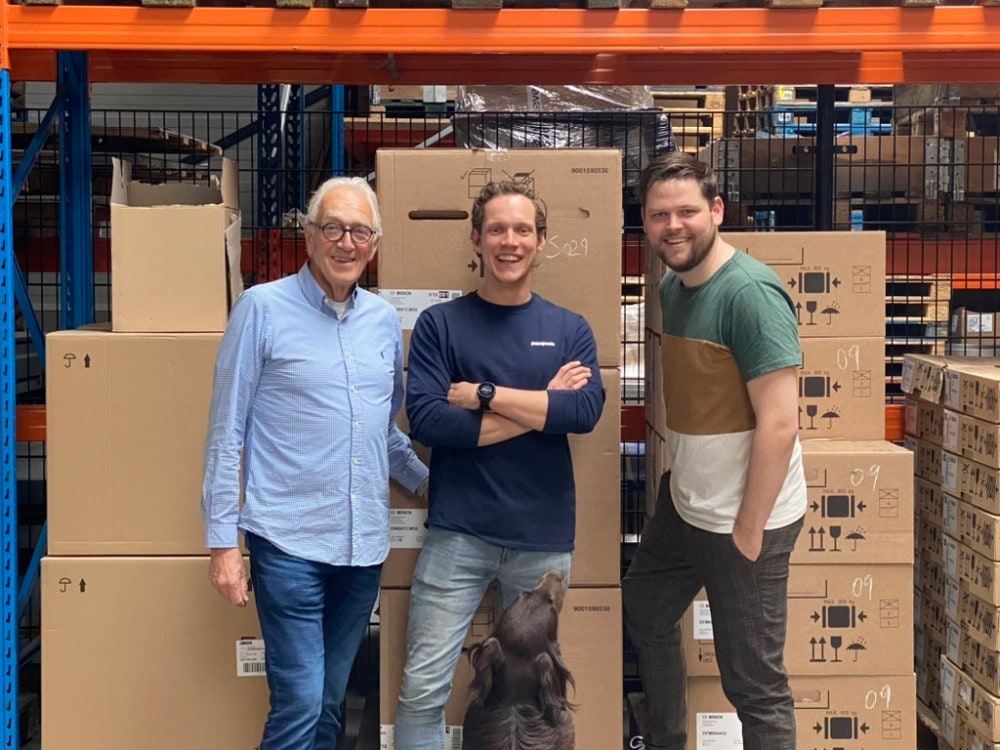
The company was founded in 2020 by Simon Rombouts, Jordy, and Cees van Nispen. The combination proved powerful: more than fifty years of experience in the kitchen industry paired with the fresh perspective of a new generation of entrepreneurs.
According to Simon Rombouts, CEO and co-founder of Chainable, the ambition extends far beyond the company itself.
- Simon Rombouts
CEO and Co-founder of Chainable
Meanwhile, the sense of urgency continues to grow. The construction sector is under increasing pressure to organize material flows more circularly, sustainability regulations are becoming more important, and both raw materials and skilled labor are becoming scarcer. For Chainable, this created an opportunity within a product category that had seen remarkably little innovation for many years.
A kitchen designed to come back
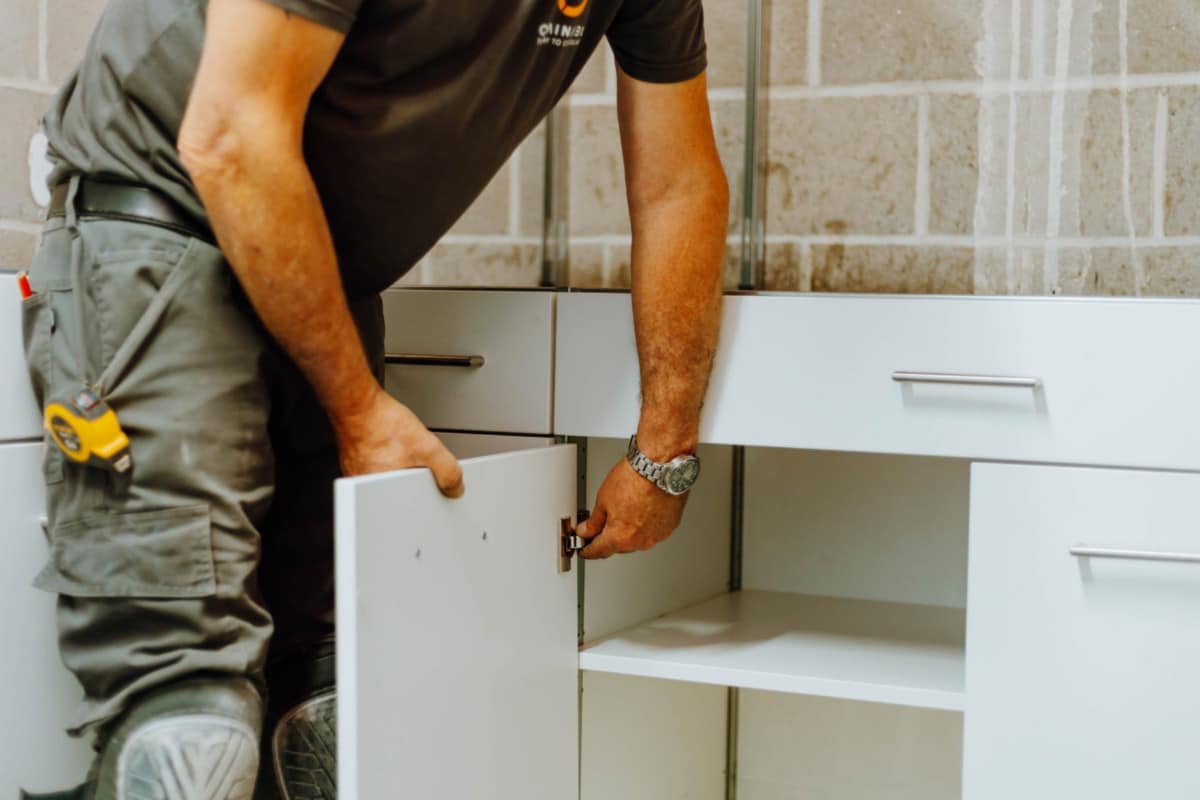
While traditional kitchens are primarily designed for installation, Chainable took a different approach. The Cero kitchen was developed to be easily dismantled without causing damage, allowing its components to be reused in the future.
The system consists of a recycled modular frame that, according to the company, can last more than sixty years. It is surrounded by a reusable outer layer made from 95 percent reclaimed chipboard. If a component is damaged or a space needs to be reconfigured, the entire kitchen does not need to be replaced.
The innovation lies not only in the product design, but also in the business model. Through its Kitchen-as-a-Service model, Chainable sells or leases kitchens with a mandatory buy-back guarantee. As a result, the company retains control over the materials and can reintroduce them into future projects.
A key element of this approach is the materials passport. This system records exactly which materials are used in which projects. According to Chainable, this creates a predictable return flow of materials, something that is often missing from circular business models.
The concept has also driven continuous product development. After eighteen months of further refinement, the company introduced a new frame that uses 40 percent less steel. According to Chainable, this made the kitchen not only more sustainable but also more cost-effective.
From pilot project to thousands of installed kitchens
The market now appears increasingly receptive to this approach. Chainable works with more than sixty housing associations, as well as more than thirty healthcare institutions, investors, government organizations, contractors, and modular construction companies. To date, more than 2,850 Cero kitchens have been installed.
One example is the partnership with housing association Woonpartners in Helmond. What began as a pilot project evolved into a framework agreement and eventually resulted in the Cero kitchen becoming the standard kitchen within the organization’s projects. One of the largest projects involves the renovation of the Prontoflats in Helmond-Oost, comprising 234 homes across ten residential buildings.
The company itself has also grown rapidly. Since its founding in 2020, Chainable has expanded to more than 25 employees. In 2026, it achieved revenue growth of 65 percent. From its assembly facility in Gilze, the company is equipped with the capacity to produce up to 3,000 kitchens annually.
According to Vincent Ruis, Startup & Scale-up Banker at Rabobank, this development is an important indicator of progress. Rabobank first supported Chainable in 2021 through a Rabobank Innovation Loan. Today, he sees a company that has demonstrated substantial market traction and is preparing for further standardization and expansion.
Creating impact beyond the company itself
For Chainable, circularity is about more than materials alone. The company also considers the broader societal impact of its value chain.
Chainable collaborates with Diamantgroep, where people who face challenges entering the labor market are involved in the production of kitchens. At the same time, the company actively encourages suppliers to participate in the circular transition. According to Chainable, enabling the Cero kitchen required partners to adapt products and processes, including the use of alternative materials and the development of take-back systems.
The company also closely measures its environmental impact. According to Chainable, more than 102,000 trees have been planted and more than 825 tonnes of CO₂ emissions have been avoided. These figures are based on the company’s own lifecycle analysis. Cero is also listed in the Dutch National Environmental Database and, according to Chainable, performs at least 40 percent better on the Environmental Cost Indicator than conventional alternatives.
- Simon Rombouts
CEO and Co-founder of Chainable
A financing partner for the next stage of growth
The relationship between Chainable and Rabobank dates back to the company’s startup phase. According to Rabobank, Chainable received a Rabobank Innovation Loan in 2021. As the company continued to scale, it required additional financing and support.
According to Vincent Ruis, the process began by identifying the company’s growth ambitions and the obstacles standing in the way of further development. This involved assessing both working capital and growth capital requirements. Together with the company’s impact investors, Rabobank structured an appropriate financing solution. In addition, Transaction Banking supported the implementation of payment systems and infrastructure designed for a growing organization.
- Simon Rombouts
CEO and Co-founder of Chainable
- Vincent Ruis
Startup & Scale-up Banker at Rabobank
Working toward a new industry standard
Although the company has already gained significant traction, Chainable still sees major opportunities ahead. The goal is to grow from hundreds to thousands of kitchens per year without compromising on quality or repairability. At the same time, the shift toward circular thinking requires changes from customers, suppliers, and procurement processes alike.
The coming years will therefore focus on further scaling. From its base in Gilze, the company plans to increase annual production capacity to 3,000 kitchens, expand beyond the Netherlands, and further improve the circularity performance of its products. It also remains committed to its ambition of becoming one of the top three kitchen suppliers in the Netherlands.
Ultimately, that ambition extends beyond market share. Chainable wants to demonstrate that there is another way to design, produce, and manage materials. If successful, the result will not simply be a different kind of kitchen, but a different way of thinking about resources, ownership, and long-term value.
About Rabobank Startup & Scale-up Team
Startups and scale-ups, through their innovative strength, are driving forces of economic renewal, make a significant contribution to solving societal challenges, and are an important engine for economic growth and employment in the Netherlands. This target group therefore represents substantial strategic value for Rabobank. The Startup & Scale-up team supports entrepreneurs who believe in this same mission by helping them grow sustainably through access to (international) networks, knowledge and financing.