Orbital Eye Uses Satellite Monitoring for Critical Infrastructure
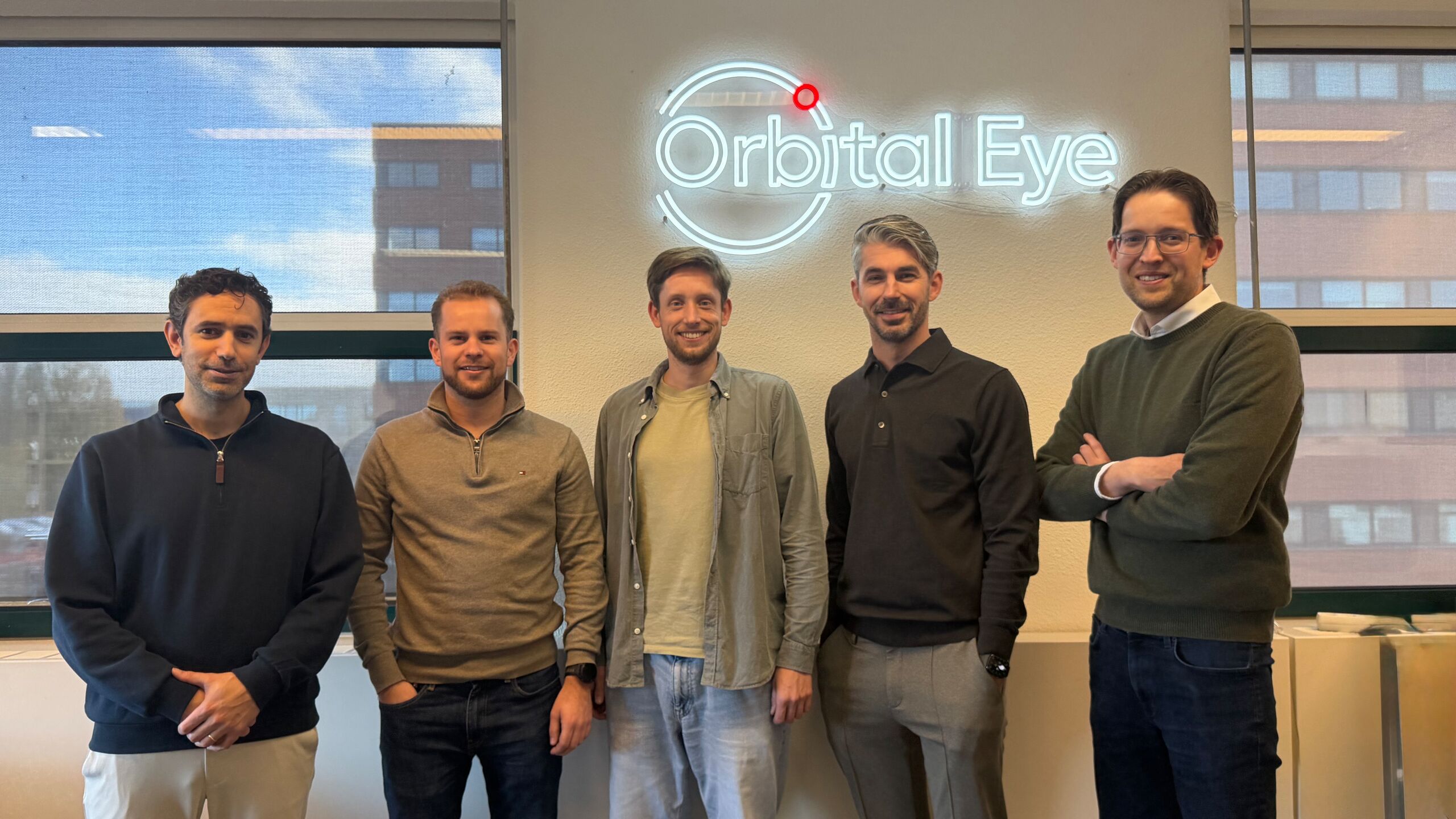
The world depends on thousands of kilometres of pipelines and electricity networks. But how do you keep them safe as excavation work, climate change and increasing pressure on infrastructure raise the risks? Dutch technology company Orbital Eye supports operators of critical infrastructure with satellite imagery and artificial intelligence (AI). This gives them more frequent insight into what is happening around their infrastructure. According to Orbital Eye, the technology is now used by more than 40 customers in approximately 20 countries. With financing from Rabobank, the company is taking the next step in its international growth.
More Infrastructure, Greater Risks
Pipelines and electricity networks are essential to modern society. Damage to a gas pipeline or high-voltage connection can have significant consequences for energy supply, public safety and economic activity. At the same time, safeguarding these assets is becoming increasingly complex.
The energy transition is driving the expansion of electricity networks worldwide, increasing the amount of construction and excavation work. Climate change and geopolitical developments also increase the need to monitor critical infrastructure effectively.
Traditionally, infrastructure is inspected by helicopter, vehicle or on foot. However, these inspections provide only a snapshot in time. What happens between two inspections often goes unnoticed. Operators also have to monitor increasingly large networks without a corresponding increase in staffing capacity.
For Orbital Eye, the answer lies in space.
Seeing What's Happening on Earth from Space
With COSMIC-EYE, Orbital Eye has developed a monitoring service that combines satellite imagery with AI. The technology automatically detects activities and changes along pipelines and electricity networks, such as excavation work, earthmoving and new construction sites.
The system primarily uses radar satellites, supplemented by optical and multispectral imagery. Radar can also observe in cloudy conditions and in the dark. As a result, Orbital Eye is not dependent on cloud-free optical imagery and can monitor infrastructure networks multiple times per week. This approach enables regular monitoring of infrastructure corridors.
AI algorithms analyse the imagery and highlight activities that may represent a risk. Infrastructure operators receive alerts through a dedicated application, enabling them to investigate potential issues and take action where necessary.
But it does not stop at alerts. COSMIC-EYE fits into customers' day-to-day workflows. Inspection teams can be directed to risk locations, record findings on site and log actions taken. This turns satellite insights into concrete measures in the field.
The main difference from traditional inspections is that operators no longer depend solely on occasional observations. They gain more frequent insight into what is happening along their networks, including in remote or hard-to-access areas.
Practical applications show that satellite monitoring can help identify activities along infrastructure corridors. This allows inspection teams to be deployed in a more targeted way.
— Sven van Haver, CEO of Orbital Eye
From Innovative Technology to Everyday Operations
Orbital Eye was founded in Delft in 2012 as a spin-off of technology company Science & Technology (S&T). Since then, the company has focused on developing satellite-based monitoring solutions for critical infrastructure.
What started as an innovative application of satellite technology has evolved into a solution used by a growing number of infrastructure operators as part of their asset management and inspection processes.
According to Orbital Eye, the company monitors more than 450,000 kilometres of infrastructure annually for over 40 customers in around 20 countries. It also reports detecting tens of thousands of third-party activities each year, with an accuracy rate exceeding 95%.
Satellite monitoring is increasingly becoming part of day-to-day infrastructure operations around the world.
One example is Spanish gas transmission system operator Enagás. Following several years of testing and development, the company selected COSMIC-EYE in 2025 to monitor its entire Spanish pipeline network of more than 9,000 kilometres. According to Orbital Eye, Enagás became the first European pipeline operator to deploy satellite monitoring at a national scale.
Adoption is also growing in the United States. Berkshire Hathaway Energy GT&S initially launched a demonstration project covering 500 kilometres of pipeline. Following a successful trial period, COSMIC-EYE is now being used to monitor nearly 6,000 kilometres of pipeline infrastructure in the northeastern United States.
French gas transmission operator NaTran combines the technology with its existing inspection activities. According to Orbital Eye, nearly 3,500 third-party activities were detected across the network in 2024, helping inspection teams focus their efforts more effectively.
These examples illustrate how satellite monitoring can be applied within infrastructure management.
New Opportunities Driven by the Energy Transition
Orbital Eye's international growth is driven in part by developments in the energy sector. While the company initially built its activities primarily in the pipeline monitoring market, demand from electricity network operators is now also growing.
Countries worldwide are investing billions in the expansion and modernisation of their electricity grids. This leads to more work in the immediate vicinity of existing cables and high-voltage connections. At the same time, society's dependence on a reliable electricity supply is increasing.
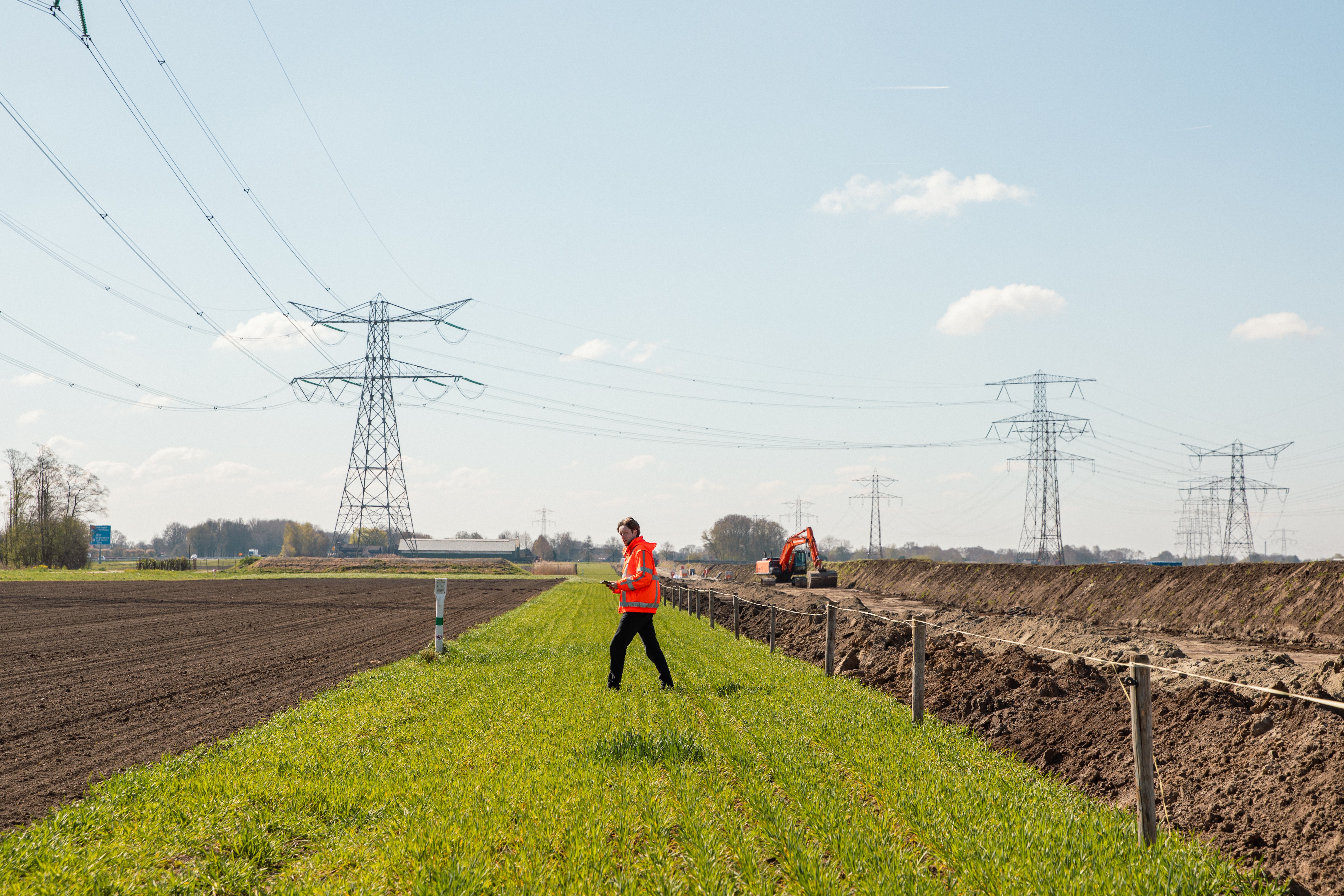
The collaboration with TenneT is one example of how this market is developing. The transmission system operator has selected Orbital Eye to provide satellite monitoring of the works on the new high-voltage connection between Rilland and Tilburg, an important project for the expansion of the Dutch electricity grid.
With COSMIC-EYE, TenneT gains weekly insight into activities along the construction corridor, such as excavation work, the presence of machinery, material storage and the construction of access roads and work platforms. This enables project teams to track progress remotely, gain a better overview of work carried out by different contractors and determine more precisely where physical inspections are needed.
The project shows that satellite monitoring can be applied both to the management of existing infrastructure and to the monitoring of expansion projects. For Orbital Eye, this broadens the technology's range of applications.
According to Orbital Eye, satellite monitoring can in certain situations lead to fewer inspection drives or flights. The actual impact depends on the specific application and how customers use the technology. Early identification of activities around infrastructure can also contribute to better-informed operational decisions.
Accelerating International Growth
The technology is now used by dozens of international infrastructure operators, according to Orbital Eye. Major operational contracts and the expansion of existing customer relationships illustrate the growing interest in satellite monitoring.
Orbital Eye's main challenge now is to accelerate commercial scaling. The company aims to further strengthen its position in Europe, accelerate growth in North America and seize new opportunities in Asia-Pacific. In early 2026, Orbital Eye opened an office in New York to operate closer to the US market and its customers.
At the same time, the company is investing in the expansion of its commercial organisation and the further development of applications for electricity networks.
The market offers opportunities for this. Infrastructure operators face the challenge of managing increasingly large and complex networks. According to the company, demand is increasingly shifting from testing technology to integrating it into existing operational processes.
— Arnaud van den Berg, CCO of Orbital Eye
Rabobank Supports the Next Phase of Growth
Orbital Eye's early development was supported by its original shareholders, innovation programmes of the European Space Agency (ESA) and co-development projects with customers.
From 2022 onwards, customer numbers grew and more demonstration projects were converted into recurring operational contracts. In 2023, the company received an Innovation Credit from the Netherlands Enterprise Agency (RVO) to make the technology more scalable.
In 2026, Rabobank provided a loan for working capital and further growth investments. This enabled Orbital Eye to invest in expanding its activities ahead of securing additional growth capital.
For the company, the involvement of the specialised Startup & Scale-up Team was particularly important. In addition to current financial performance, the company's growth potential and the investments needed to realise it were also considered.
— Ivo Verlinden, CFO of Orbital Eye
For Rabobank, Orbital Eye is an example of an innovative frontrunner. Using satellite imagery and artificial intelligence, the company helps operators gain insight into activities around their infrastructure. The COSMIC-EYE proposition is innovative and scalable, and its added value for operators has been well validated. Orbital Eye therefore aligns well with the focus of the Startup & Scale-up Team: technology-driven propositions with international growth potential.
— Fabian Groeneveld, Startup & Scale-up Banker at Rabobank
Orbital Eye aims to further expand its international activities in the coming years and make satellite monitoring more widely available for pipelines, electricity networks and other forms of critical infrastructure.
The experience gained with existing customers provides an important foundation for this. Through further investment in people, technology and commercial development, the company aims to help more infrastructure operators monitor activities around their networks and support operational processes.
With Rabobank as its financing partner, Orbital Eye is taking the next step in the further development of the company and its international activities.
About the Rabobank Startup & Scale-up Team
Through their innovative strength, startups and scale-ups renew the economy, contribute significantly to addressing societal challenges and are an important driver of economic growth and employment in the Netherlands. This segment therefore represents significant strategic value for Rabobank. The Rabobank Startup & Scale-up Team helps entrepreneurs who believe in this same mission grow sustainably by providing access to its international network, knowledge and financing.
Disclaimer
Please note: This story was written in collaboration with Orbital Eye, based on information they provided. Ambitions and future plans are not guarantees. This article is for information purposes only and does not constitute an offer, advice or recommendation from Rabobank.